

With the rapid development of AI technology, international competition and national security risks are intensifying. As a crucial hub in the global technology supply chain, the balance between promoting technological innovation and safeguarding national security has become a key focus for the government, industry, and academia in Taiwan.
To deepen international dialogue, the International Research Foundation for Artificial Intelligence Law and Shih Chien University will host the "International Academic Symposium on AI Governance and National Security" on Tuesday, March 4, 2025, from 9:00 AM to 11:15 AM, at the Chang Yung-Fa Foundation in Taipei. This conference will bring together experts from international think tanks, including the Stanford University Hoover Institution, the Hudson Institute in Washington D.C., and the Yale Jackson School of Global Affairs, along with representatives from the Taiwanese government, industry, and academia, to jointly discuss AI governance trends and national security challenges, helping Taiwan maintain its leading position in global technology competition.
翻譯如下:
🤝 Government and Academia Join Forces to Discuss the Future of Technology Governance
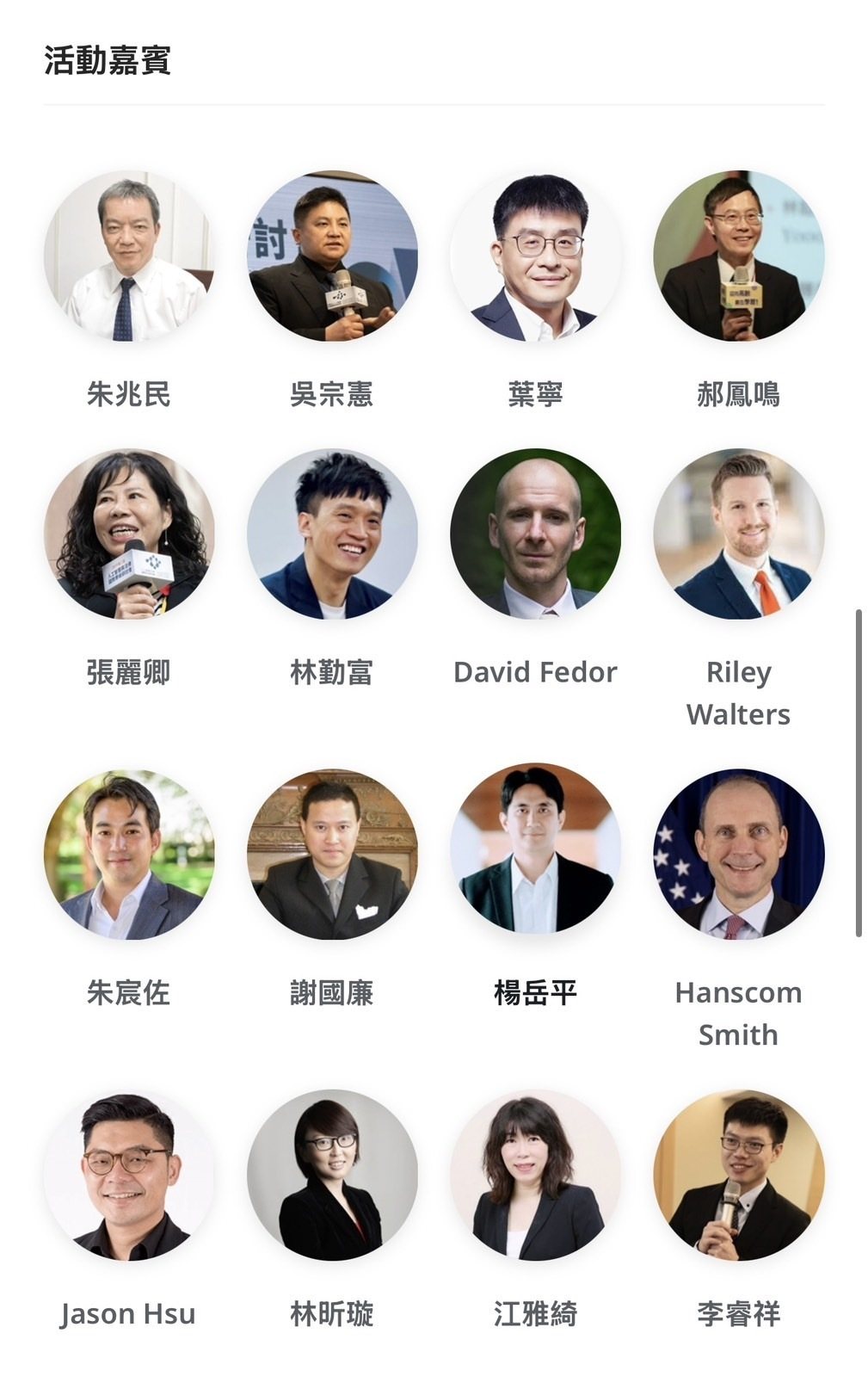
This symposium will be inaugurated by the Foundation's Chairman, Mr. Chu Chao-Min, and will feature welcoming remarks from distinguished guests, including Legislator Wu Tsung-Hsien, Minister of the National Science and Technology Council Wu Cheng-Wen (Invited), Permanent Secretary of the Ministry of Digital Affairs Yen Ning, and Dean of the Shih Chien University College of Law Hao Feng-Ming. They will discuss how to strengthen Taiwan's technology governance framework and ensure that industrial development and national security proceed in parallel amidst global competition.
🎤 Keynote Speeches: Global Regulatory Trends and Taiwan's Digital Governance Challenges
This forum features special keynote speeches. Permanent Secretary of the Ministry of Digital Affairs, Yen Ning, will present "Prospects for Taiwan's Digital Legal Development," analyzing Taiwan's opportunities and challenges in digital governance. This will be followed by a presentation from the Foundation's CEO and Chair Professor of the Shih Chien University Department of Law, Li-Ching Chang, titled "Taiwan's AI Legal Governance: Balancing the Brussels Effect with Local Development," which will explore the impact of international regulations on Taiwan's technological development and propose governance solutions that align with both local needs and international standards.
oundtable discussions: Analyzing Technology, Policy, and Multinational Cooperation Mechanisms
The symposium will host two specialized roundtable discussions, analyzing AI development and national security challenges from different perspectives.
Panel 1: "AI Governance and National Security (I): The Interplay of Technology Policy and Law" The first panel will be moderated by Professor Ching-Fu Lin, Director of the Institute of Technology Law at National Tsing Hua University. The panel invites experts including David Fedor, Policy Scholar at the Hoover Institution at Stanford University; Riley Walters, Senior Fellow at the Hudson Institute in Washington D.C.; Professor Dao-Wei Wang of the National Tsing Hua University Department of Physics (Invited); Chen-Tso Chu, Secretary General of the Foundation and Visiting Scholar at Stanford Law School; and Hsieh Kuo-Lien, Director of the Financial and Economic Law Research Center at National Kaohsiung University. They will jointly discuss the intersecting impact of AI innovation and national security policy, and analyze global policy trends and challenges.
Panel 2: "AI Governance and National Security (II): Multinational Legal Collaboration and Cooperation Strategies" The second panel will be moderated by Associate Professor Yueh-Ping Yang of the National Taiwan University College of Law. The panel invites experts including Hanscom Smith, Senior Fellow at the Yale Jackson School of Global Affairs; Jason Hsu, Senior Fellow at the Hudson Institute in Washington D.C.; Assistant Professor Hsin-Hsuan Lin of the National Cheng Kung University Department of Political Science; Professor Ya-Ching Chiang of the National Taiwan Ocean University College of Ocean Law and Policy; and Jui-Hsiang Li, Deputy Secretary-General of the Foundation. They will explore possible pathways for international cooperation and regulatory coordination and predict global AI governance development trends.
Deepening International Dialogue and Fostering a New Chapter of Taiwan-U.S. Cooperation
Following the roundtable discussions, the Foundation will engage in academic exchange with representatives from international think tanks, including the Stanford University Hoover Institution, the Yale Jackson School of Global Affairs, and the Hudson Institute in Washington D.C. Through research sharing and policy dialogue, the goal is to deepen cooperation between Taiwan and the United States in the field of technology governance. We anticipate that continuous cross-national exchanges will jointly promote responsible global technological development and enhance Taiwan's influence in international technology governance and national security.
Sincere Invitation to Academia, Industry, and Policymakers
We sincerely invite experts, scholars, government officials, and industry professionals concerned with AI governance, legal regulation, and national security issues to actively participate in this symposium. For more event details and registration information, please refer to the official website of the International Research Foundation for Artificial Intelligence Law. Let us collectively shape the blueprint for technology governance in the new era through forward-thinking ideas and cross-disciplinary dialogue.
Registration Link:
https://www.accupass.com/event/2502130841341344295787......

 SSL 256bit transmission encryption mechanism